CycleCount Kit: Mobile Passes, Scaling Lessons, and pallet.js
A CycleCount Kit build log on recent mobile first UI refinement passes, lessons about scaling small tools, and what pallet.js has taught me about managing complexity.
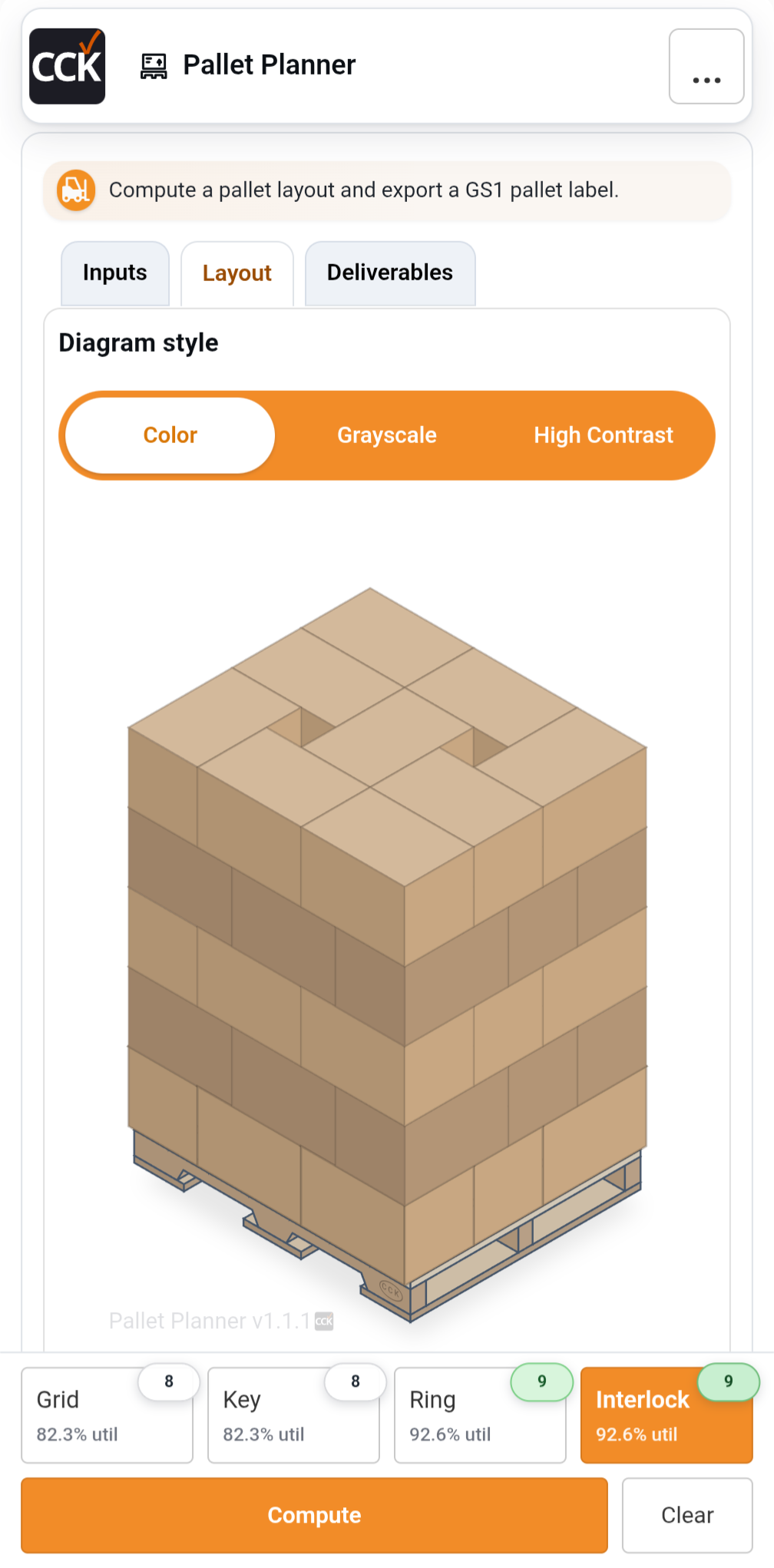
It has been a while since my last CycleCount Kit build log, and a lot has changed.
The biggest shift since that update has not been one headline feature so much as a long series of refinement passes, especially on mobile. CCK started as a set of practical tools I wanted for real warehouse work, but as the project has grown, I have spent more time on the part that decides whether a tool actually feels usable: layout, hierarchy, feedback, restraint, and the discipline to simplify.
A lot of recent development has been mobile first. That has meant revisiting spacing, output sizing, controls, helper text, share flows, and the overall rhythm of the interface on a smaller screen. In several places, the desktop version looked fine right up until the mobile version made its weaknesses obvious.
Headings that were easy to skim past, controls that felt too dense, outputs that were technically correct but not comfortably readable, and UI patterns that worked once but did not scale across tools all needed another pass.
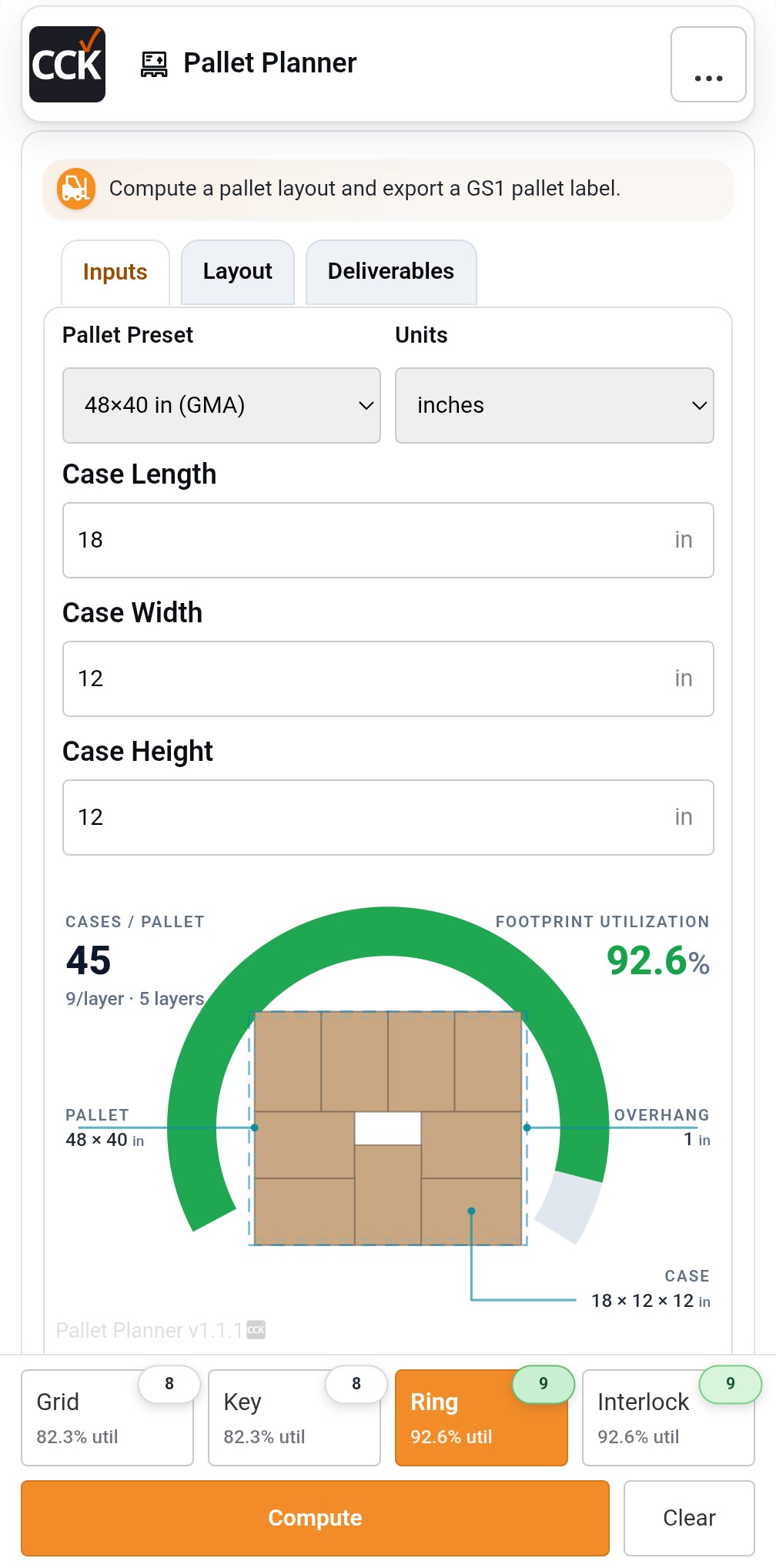
That work ended up being useful beyond just making the site look better on a phone. It forced me to make the product more consistent. On a smaller screen, every extra layer, repeated explanation, awkward control, or fussy visual treatment starts to feel expensive. Mobile became a good filter for that. It pushed me to simplify more aggressively and get clearer about what the primary action is in each tool.
It also taught me more about scaling, both in the UI sense and in the code sense.
A lot of things in a small project feel clean right up until they need to support a second or third variation. One good layout becomes several output modes. One clean component becomes a pattern shared across multiple tools. One render path becomes export logic, share logic, mobile logic, and state restoration logic. The challenge has not just been adding features. It has been protecting clarity while the number of contexts and edge cases keeps growing.
That lesson shows up most clearly in pallet.js.
The pallet planner continues to be the most interesting part of CCK and also the part that teaches me the most about complexity. It is doing real work now: layout generation, filtering, rendering, export concerns, mobile presentation, and a growing list of edge cases around how pallets should actually look and behave. That is exciting, but it also means pallet.js has become a very honest file. Every shortcut, every assumption, and every mixed responsibility shows up eventually.
That has pushed me further toward iterative development. More and more, the right move has been to land the smallest useful version first, see where it breaks, and tighten the next pass based on actual friction. I have found that trying to fully pre-design the final version usually produces more waste than insight. The better rhythm has been to ship a constrained version, inspect the rough edges, and let the next pass be informed by what the tool is actually doing in practice.
A lot of the recent work around the pallet planner has not been glamorous. It has been about diagnosing rendering artifacts, tightening view behavior, improving feedback when computations are heavy, and being more deliberate about how far the file should grow before something gets extracted or simplified.
That has probably been the biggest technical lesson of this stretch: not every problem needs a cleverer solution. Sometimes the right answer is to make the geometry more explicit, reduce surface area, and choose the version that will still be easy to reason about six weeks later.
So this phase of CCK has been less about chasing breadth and more about improving fit and finish while learning where the architecture starts to strain. The tools are more usable than they were in January, especially on mobile, and I have a much better sense now of which patterns scale cleanly and which ones quietly turn into maintenance debt.
There is still a lot I want to build, but at this point I am just as interested in making the existing tools sharper, clearer, and more durable. That has been the real work lately.
You can find CycleCount Kit here: https://cyclecountkit.com/